
Hamburg and emigration

No tour on the subject of emigrationin Hamburg can do without the name Albert Ballin. That’s why we start our Hamburg tour at the Hotel Atlantic , which was built at the beginning of the 20th century by Albert Ballin , among others, as a hotel for first-class emigrants. The building has been a listed buildingsince October 2010. Previously , parts of the James Bond film Tomorrow Never Dies were filmed there. In 2011, the hotel was repeatedly awarded the highest rating category of five-star superior. Via the former city fortifications from the 16th, 17th and 18th centuries, the Glockengießerwall and Ballindamm , wereach the Ballinhaus , where HAPAG-LLOYD is located today. Albert Ballin took over the directorship of HAPAG in 1888 and , as Hamburg-Amerikanische Packetfahrt-Actien-Gesellschaft , became heavily involved in the emigration business. In 1970, HAPAG merged with Germanischer Lloyd from Bremen to form HAPAG-LLOYD. Since then, further mergers have taken place, making the company the fifth largest shipping company in the world in 2018.
We make our way through Alstertor street towards the harbour, passing the Thalia Theatre, Gerhardt-Hauptmannplatz, Mönckebergstraße and the Kontorhaus district, where we come across the imposing Chilehaus building. Completed at the beginning of the 20th century, it demonstrates the prosperity that Hamburg merchants were able to achieve through overseas trade. A little further south is the Messberghof, formerly known as the Ballin House. Due to Albert Ballin’s Jewish ancestry, the house was renamed Messberghof under National Socialism.
Our city tour of Hamburg and emigration continues along the Dovenfleet, over the Kornhausbrücke bridge and into the Speicherstadt. The largest warehouse complex built on stilts in the world was constructed between the late 19th and early 20th centuries – in the midst of waves of emigration – and has been a UNESCO World Heritage Site since 2015. In the newly built Überseequartier, we can already smell the air of distant lands. This is where one of Hamburg’s three cruise terminals is located. This is where modern emigration becomes visible. Directly opposite, on the southern bank of the Elbe, in the Hansahafen, ships used to depart, taking emigrants from the emigration halls – today’s Ballinstadt – to the large emigration ships bound for Cuxhaven.
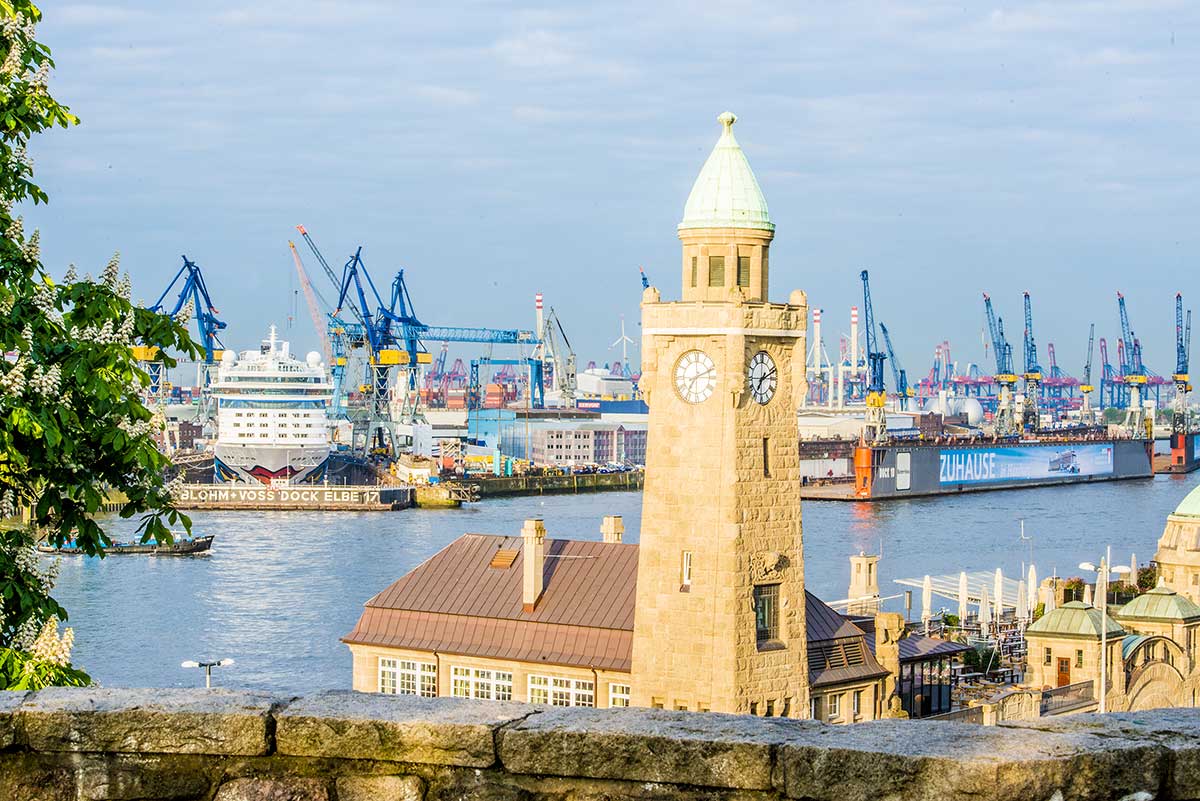
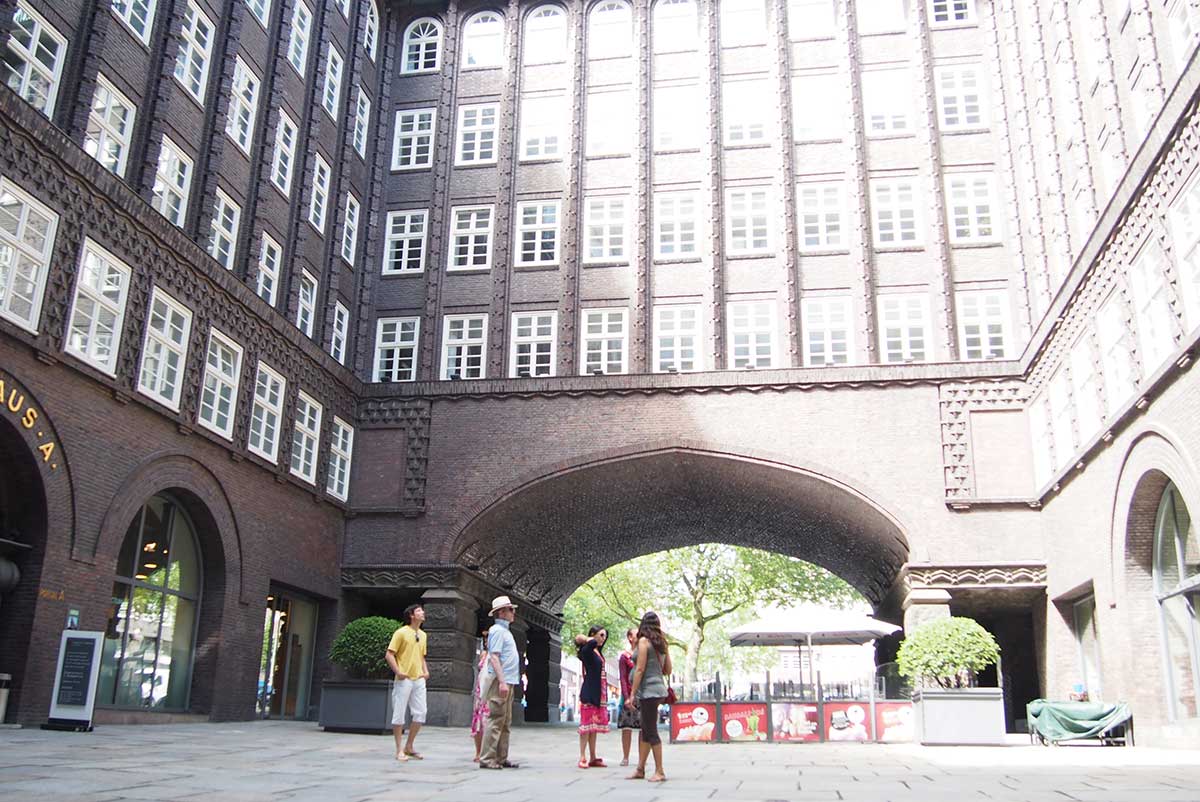
This Hamburg tour takes us westwardsthrough the modern HafenCity with the Elbphilharmonie concert hall, past the Überseebrücke, which has been used by cruise ships and British ferries since 1930, to the Landungsbrücken, which originally served as a landing stage for the passenger steamers of the overseas lines. At bridge 3 you will receive more information about the Jewish emigrants who tried to emigrate to Palestine on the M/S Exodus in 1947 but were not allowed to immigrate there.
Optionally, after a final long walk along the Elbe, we can reach the Altona cruise terminal, which stands directly next to the England ferry terminal that served the England ferry until 2002, serving as a contrast to the modern era of temporary emigration. Nothing on today’s ships reminds us of the hardships and difficulties that emigration presented for emigrants at the end of the 19th and beginning of the 20th centuries. And so our tour of Hamburg and emigration comes to an end.
Brief information
Highlights:
Hotel Atlantic, Ballindamm, Binnenalster, Thalia Theatre, Chilehaus, Messberghof, Speicherstadt, HafenCity, Cruise Terminal, Elbphilharmonie, Landungsbrücken, Cruise Terminal Altona
Distance, approximate duration:
3–4 hours
Starting point:
Hotel Atlantic
End point:
Cruise Terminal Altona
Getting around:
on foot and by harbour ferry, if desired
Note:
This tour can be extended or shortened as desired.


